
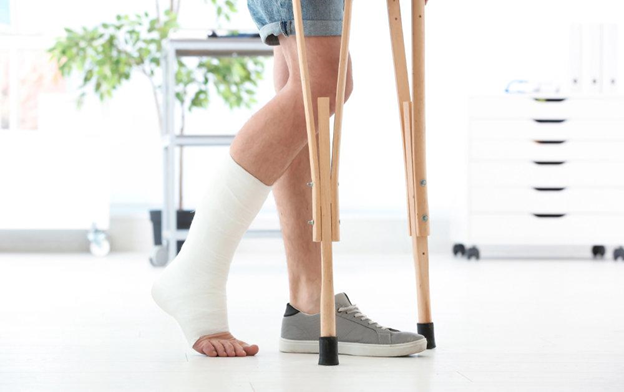
A broken bone can happen in a matter of seconds. A fall on the ice, a hard tackle during a game, a heavy box dropped at work, or a single misstep on the stairs can each result in a fracture. Once the pain sets in, you need answers quickly, and waiting several days for an appointment is rarely a reasonable option. Solar Urgent Care provides prompt treatment of broken bones for both adults and children, with on-site imaging and same-day care. 

A fracture is a crack or break in a bone, and while some breaks are obvious, others are difficult to identify without an X-ray. Being evaluated early helps you understand the seriousness of the injury and what the next steps should be. This guide explains the common signs of a fracture, what actually happens during a visit, and how urgent care for fractures can help you begin healing safely and with more clarity.

Think You May Have a Broken Bone? 

fracture usually produces noticeable symptoms soon after the injury, although those symptoms can range from mild to severe. Recognizing what to look for makes it easier to decide when to seek care, since some signs clearly suggest a broken bone while others may also point to a sprain or deep bruise. 

  • Sudden pain following a fall, impact, or twist 
  • Swelling and bruising around the injured area 
  • Difficulty moving the hand, arm, foot, or leg 
  • Pain when attempting to put weight on the area 
  • A visible bend or bump where the bone appears out of position 

Because not every fracture causes an obvious deformity, and some people can still move a broken bone, early evaluation becomes especially important. A small crack may cause only mild discomfort at first, leading some people to delay care, and an untreated fracture can begin to heal in the wrong position. An X-ray provides a clear view beneath the surface to help determine an accurate fracture diagnosis, allowing the provider to build a treatment plan suited to your specific injury. 

Immediate X-Rays Available On-Site 

Telling the difference between a fracture and a severe sprain is often impossible by sight alone. A fracture X-ray reveals whether a bone is cracked or broken, identifies where the damage is, and shows how severe it is. This detail matters because the location and type of break frequently determine how the injury is treated. 

Going to an urgent care with X-rays available on-site means you avoid traveling to a separate imaging center or waiting several days for results. The provider can review your X-ray during the same visit and begin planning treatment immediately. On-site imaging also reduces the need for additional appointments, and when a specialist is necessary, your results can be forwarded quickly so that referral coordination proceeds without delay.

Common Fractures We Treat 

Hands and fingers are especially vulnerable because people rely on them for nearly every task, and these breaks commonly occur during sports, after a fall, or in workplace accidents involving machinery or heavy tools. Foot and toe fractures follow a similar pattern, often resulting from dropped objects, a forceful twist, or athletic activity, since a heavy item landing on the foot can crack one of the smaller bones, while a sudden twist on the field can break a toe. 

Wrist and forearm fractures are some of the most common breaks we treat, largely because when people fall, they instinctively reach out to catch themselves, so a lot of force is concentrated on those bones. Ankle fractures are common in sports, after a misstep off a curb, or from a twist that rolls the joint. The ankle bears the body’s weight; therefore, injury to this area requires prompt assessment to preserve future movement. 

Splinting and Casting for Fracture Stabilization 

A bone fracture requires immobilization as one of the most important first steps in treatment. Excessive movement can dislodge the bone, irritate the surrounding tissue, and impede healing. Stabilizing the area can protect the injury and help lessen pain. For these reasons, a provider often uses splints as one of the first treatments. 

Both a splint and a cast immobilize a bone, but they are used for different purposes at different points in an injury. A splint is often preferred soon after a break, as swelling is still changing and can be adjusted more easily during those early days. Fractures are usually treated with a cast once the swelling is down and the bone needs strong, solid support to heal. Choosing the appropriate treatment depends on the type of fracture, where it is located, and how much the bone has shifted.

Pain Management After a Fracture 

It’s normal to feel uncomfortable when you’re recovering from a broken bone, and there are a few simple things you can do to help you stay more comfortable as you heal. Depending on the type of injury you have, your provider will give you clear direction, and common recommendations are the following: 

  • Resting the injured area and adjusting activities that trigger pain 
  • Applying ice to reduce swelling, with a cloth between the ice and the skin 
  • Elevating the injured area above heart level whenever possible 
  • Following your provider’s medication guidance for managing pain 

One detail patients frequently overlook is that pain levels don’t reliably reflect how serious a fracture actually is. A minor break can be intensely painful, while a more significant one may feel surprisingly mild at first, so you should never judge an injury by pain alone. Continuing your usual activities can worsen a fracture, even when the pain seems manageable, which is why following your treatment instructions closely gives the bone the best chance to heal correctly.

What to Expect During Your Visit 

The visit begins with a conversation about how and when the injury occurred and when the pain began. The provider will ask about your symptoms, including any prior injuries to the same area. A physical exam will be performed to determine the source of the pain and to assess movement in the affected area. 

Usually, if a fracture is suspected, the next step is an X-ray. Solar Urgent Care provides on-site X-rays, fracture evaluation, splinting, casting, and pain management guidance in a single visit. The treatment may include a splint or cast, pain management instructions, a list of what to avoid, and follow-up instructions so you know what to do and when to return.

Orthopedic Referrals When Needed 

Most breaks can be managed in an urgent care setting, but some injuries need the expertise of a specialist. If the fracture is complex, extends into a joint, or the bone is grossly out of alignment, an orthopedic referral may be recommended. Injuries that may need surgery are also referred to specialized care. 

When a specialist is needed, the urgent care team helps connect you with the appropriate provider. Your X-rays and examination findings are often shared so that your fracture care can continue without unnecessary interruptions. This level of coordination supports your recovery planning and keeps treatment progressing smoothly from one visit to the next. 

Understanding the Healing Timeline 

There is no single timeline for all broken bones, as the healing process depends on several factors simultaneously. How fast you recover depends on your age, the site of the fracture, the severity of the break, and your general health. In many cases, children heal faster than adults, and smaller fractures in bones like the finger may heal more quickly than fractures in larger, weight-bearing bones. 

Immobilization is the initial treatment for most fractures. A splint or cast holds the bone in place. Your provider may also allow a gradual return to activity as healing progresses, rather than an immediate return. Follow-up visits may be recommended to check how the bone is healing and monitor your recovery progress. 

Follow-Up Care Is Part of Recovery 

Follow-up visits are an essential part of healing. They allow your provider to verify that the bone is mending in the correct position and to identify any complications early. If something is not progressing as it should, the treatment plan can be adjusted before the problem grows. These appointments also guide your safe return to daily activities, work, and sports, since resuming demanding tasks too soon can place harmful stress on a bone that is not yet ready. 

Fractures often heal without problems, but it is good to be aware of red flags that require a second look. Call your provider or return for care if you notice any of the following: 

  • Pain that intensifies rather than gradually improves 
  • Swelling that continues to worsen over time 
  • Numbness, tingling, or an unusually cold sensation in the area 
  • A splint or cast that feels too tight, too loose, or damaged 
  • Little to no improvement after several days have passed 

These changes don’t necessarily indicate that something is wrong, but they are worth having checked. Addressing these issues early can help keep your recovery on track and reduce the risk of delayed healing.

Why Choose Solar Urgent Care for Fracture Treatment? 

You don’t need an appointment to be evaluated for a possible broken bone. As an urgent care option, Solar Urgent Care welcomes walk-ins and provides same-day evaluation, so you can address an injury when it happens rather than delay care. During that same visit, a provider can examine the injury and begin treatment right away. 

Solar Urgent Care brings together the services needed to evaluate and treat many common injuries in a single location. The team provides: 

  • On-site X-rays to confirm a fracture and identify its location 
  • Splinting and casting to stabilize the injured area 
  • Pain management guidance for a more comfortable recovery 
  • Orthopedic referral coordination whenever specialist care is required 

Care doesn’t stop once a splint or cast is put on. The team will walk you through your treatment plan in plain language and provide clear follow-up recommendations, so you always know what to expect next. Each plan is matched to your specific injury and consistently focuses on safe, steady healing.

Get Prompt Care for a Suspected Fracture 

A suspected broken bone doesn’t have to involve a long wait or a confusing process. Whether your injury resulted from a fall, a sports collision, a workplace accident, or another form of trauma, having it evaluated early gives you the strongest chance of healing well. Delaying care can allow a fracture to worsen or settle into the wrong position, which is why prompt evaluation is genuinely worth the trip. 

Solar Urgent Care provides fast X-ray, fracture examination, splinting and casting, and pain management advice in a single visit. Should you require a specialist, our team coordinates orthopedic referrals so your care continues uninterrupted. Walk-ins are welcome, with same-day care for both adults and children. Walk in today at Solar Urgent Care for immediate treatment of fractures and broken bones, and let the team help you get started on your recovery as quickly and safely as possible. 

FAQs 

Yes. With on-site X-rays, a provider can confirm a fracture, identify its location, and recommend treatment during the same visit. 

Yes. Your injury can be imaged and reviewed during your visit, without a trip to a separate facility. 

The symptoms often overlap, since both produce pain and swelling. An X-ray is the most reliable way to tell them apart. 

That depends on the break. Splints are often used early while swelling changes, and a cast may follow once the area has stabilized. 

Yes. Finger fractures are common and can usually be evaluated, imaged, and stabilized at an urgent care center.

Yes. Many toe fractures can be treated at urgent care, with a referral arranged if the break is severe.

Many fractures heal in about 6 to 8 weeks, though the timeline varies with age, location, and severity. 

Go to the ER for severe injuries, such as a bone breaking through the skin, heavy bleeding, an obviously deformed limb, or a possible broken hip, neck, or back. 

No. Many simple fractures can be managed at urgent care, while complex, displaced, or joint-related fractures may require referral. 

Keep the area still, apply ice with a cloth against the skin, elevate it if possible, and avoid putting weight on it until you are seen. 

It is best to avoid walking on the injury, as doing so can worsen it. Wait until a provider has evaluated it. 

A hairline fracture usually causes mild, dull pain that may increase with use, which is why these breaks are sometimes missed without an X-ray.

The provider reviews how the injury occurred, examines the area, and generally orders an X-ray, then explains the findings and options. 

That depends on the injury and the activity’s physical demands. Your provider will advise a safe return based on your progress. 

Follow-up visits confirm the bone is healing correctly, catch complications early, and guide a safe return to your normal activities.